Hardware-free telematics solutions connect mixed-powertrain fleets via OEM cloud APIs. By streaming real-time location, odometer, fuel, and EV battery metrics into one dashboard, fleet managers eliminate hardware friction and portal fatigue.
Software-defined vehicles are built with sensors and modems used to track telemetry data for manufacturer-connected services. For fleet operators managing mixed-powertrain fleets, tracking data on multiple portals creates administrative friction.
Standard Fleet’s modern telematics solutions use a secure cloud API to tap into existing software and stream real-time vehicle data directly to a unified platform for supported mixed fleet vehicles.
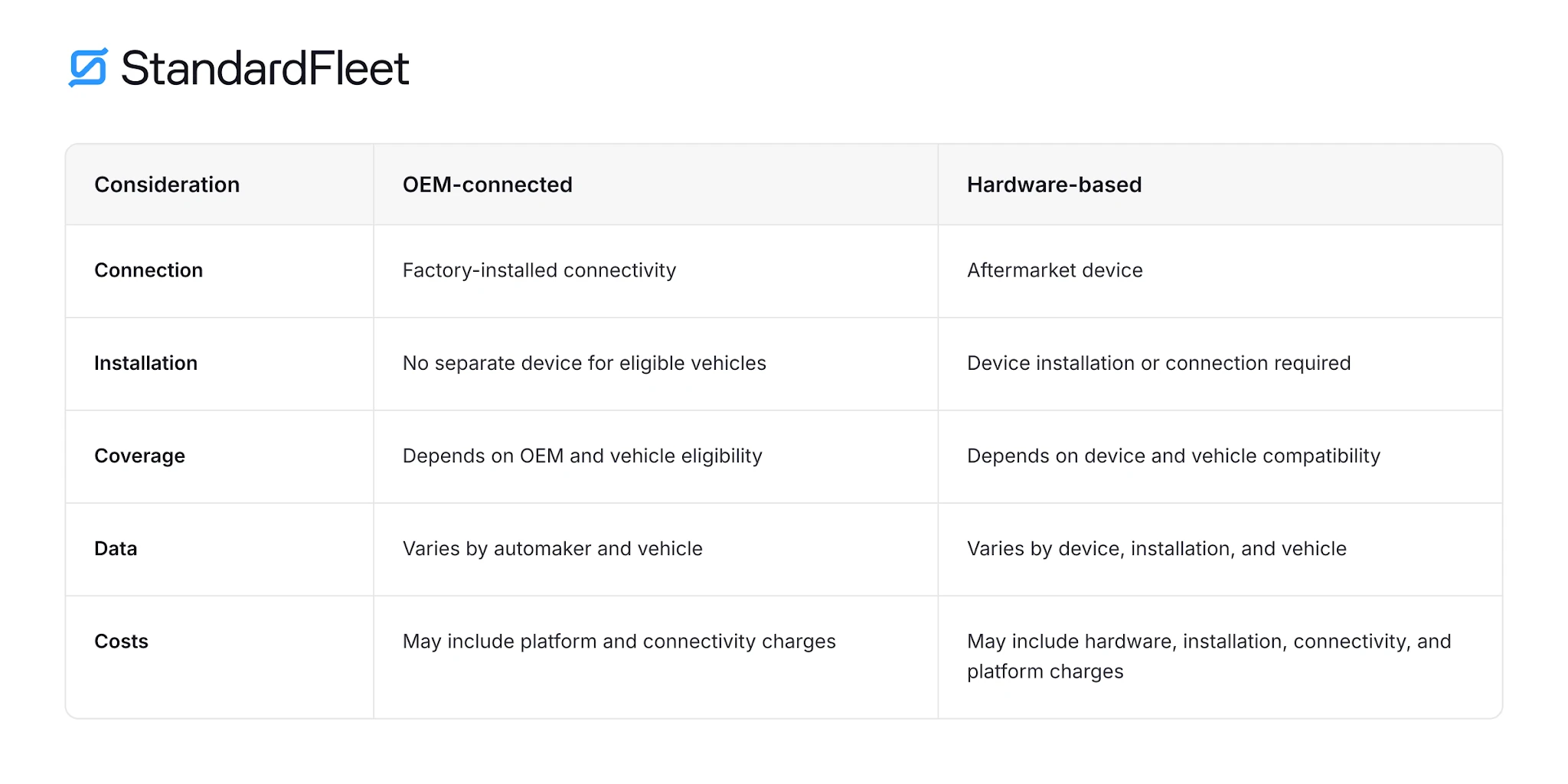
Both approaches collect vehicle data and make it available in fleet software, but they connect differently:
The best option depends on the vehicle and the information an operator needs. Coverage and available data vary by OEM, vehicle, device, and connection. Some fleets may use both approaches.
Onboarding starts with identifying which vehicles can connect through an OEM integration. Timing depends on the automaker, vehicle eligibility, required documentation, and the connection process.
A typical process includes:
Depending on the vehicle and connection, fleet managers may be able to review fuel levels for gas-powered vehicles and battery state of charge for EVs in the same dashboard. Supported vehicles may also provide odometer readings and vehicle health or diagnostic information.
Available fields vary by make, model, and integration, so operators should confirm that each connection provides the data they need.
A software-first telematics solution also allows operators to track diagnostic trouble codes on supported vehicles and schedule maintenance based on predictive alerts before minor mechanical faults cause unexpected breakdowns and asset downtime.
OEM-connected telematics removes the need for a separate aftermarket device on eligible vehicles, including the risk of an OBD-II dongle being unplugged. It still depends on the vehicle’s built-in hardware and connectivity.
Data availability and refresh rates can vary based on cellular coverage, vehicle state, automaker settings, and the integration. Fleet operators should compare connection behavior against their specific needs, particularly when timely location data is important.
For compatible mixed-powertrain fleets, modern telematics solutions eliminate hardware installation while reducing asset downtime. The right solution depends on your fleet’s vehicles and the data your team needs.
Data from supported vehicles is centralized on a single platform so fleet operators can accurately track asset usage, streamline daily operations, and monitor gas and EV-specific metrics effortlessly.
Submit a VIN list to see which of your mixed fleet vehicles are supported.