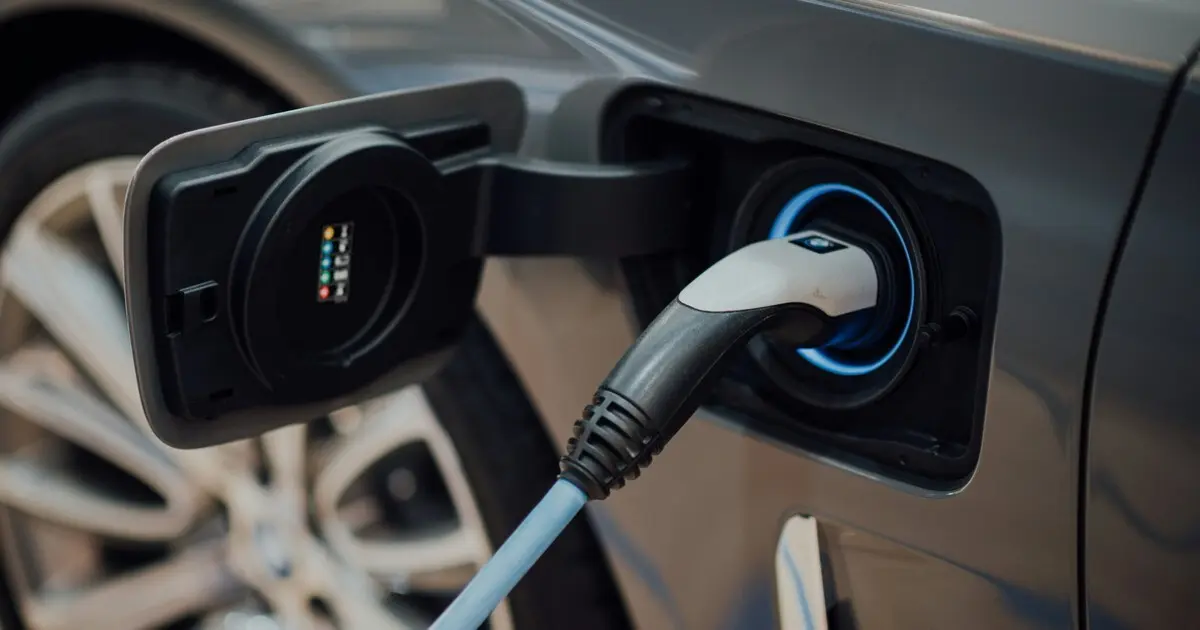
A software-first GPS tracking system for vehicles connects eligible vehicles through their factory-installed modems and automaker APIs. For supported vehicles, it can eliminate aftermarket installation and bring location and vehicle data into one platform.
- Onboard eligible vehicles remotely using their VINs, without installing an aftermarket tracker.
- View supported vehicle data across gas, hybrid, and electric vehicles in one dashboard.
- Reduce the risk of tracking interruptions caused by unplugged or damaged aftermarket devices.
As fleets grow, installing and managing aftermarket tracking devices can add work for operators. Hardwired devices may require an installation appointment, while plug-in trackers can be disconnected or tampered with. Managing vehicle data across multiple systems can create additional administrative work.
A software-first GPS tracking system for vehicles skips hardware installation on eligible vehicles by connecting securely to factory-installed modems via cloud APIs. Growing operations can onboard entire fleets in days, keep assets on the road, and unlock fast refresh rates with real-time tracking to support fleet management. Explore how OEM-native telematics compares to aftermarket trackers and see how data-driven fleet management is the key to frictionless growth.
Traditional hardware GPS trackers with location-only tracking systems struggle to meet the data-heavy demands of modern rental, mobility, and delivery fleets. Legacy processes and outdated OBD-II units are limited by outdated cellular networks and infrequent update intervals, leading to operational blind spots, logistical dead zones, and inaccurate arrival and departure times that create gaps in mileage logs. This operational friction prevents fleet growth by introducing backlogs and costly downtime while each asset sits idle waiting for installation.
Software-first vehicle GPS tracking connects supported assets to factory data via secure cloud APIs, allowing growing operations to scale rapidly with real-time tracking and automated billing tied to GPS checkpoints. Eliminating plug-in devices also resolves data vulnerabilities from device tampering, dropped signals, and ongoing costs for hardware maintenance, installation, and subscriptions.
For eligible vehicles, operators can connect to factory-installed telematics without scheduling an aftermarket installation. The process generally involves:
1. Submit VINs: Share the vehicles you want to connect.
2. Confirm eligibility and authorization: Complete the ownership verification, consent, or other steps required for the vehicle and automaker.
3. Activate access: Once connected, supported location and vehicle data become available in Standard Fleet.
Activation timing and available data vary by vehicle and automaker. Because no additional device is required for eligible vehicles, operators can avoid the installation and device-management work associated with aftermarket hardware.
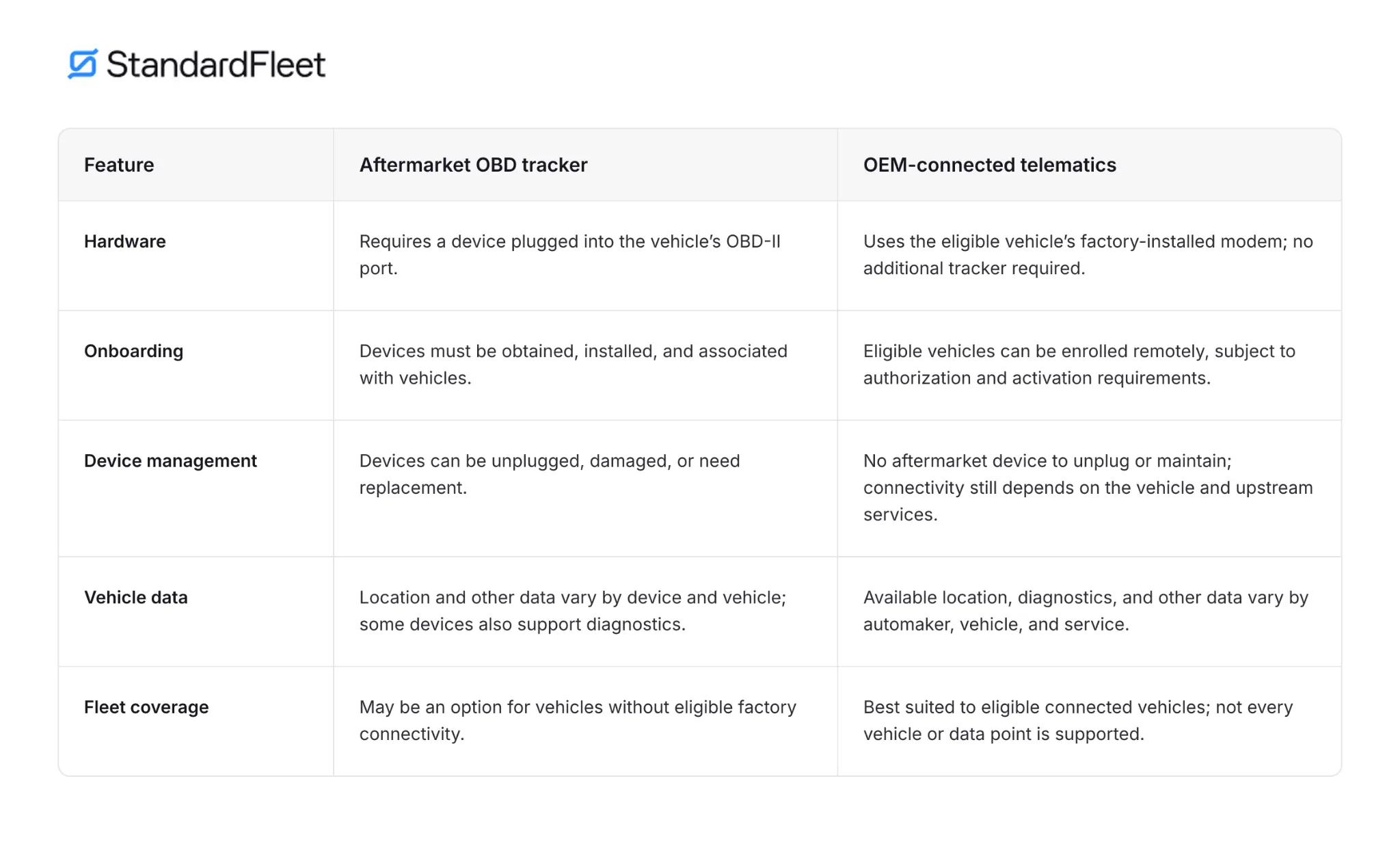
Hardware-based trackers rely on external devices plugged into a vehicle’s OBD-II port, leaving operators vulnerable to physical dislodging, shallow location data, and high administrative overhead.
In many cases, yes. OEM-connected telematics can provide more than location data, including supported odometer readings, fuel or battery information, and diagnostic trouble codes.
Availability depends on the automaker, vehicle, and connected-data service. Before replacing an aftermarket device, operators should confirm that the OEM connection provides the specific data their workflows require.
Operators can view:
- Live odometer readings
- Battery state of charge for hybrids and EVs
- Diagnostic trouble codes (DTCs)
Mixed fleets often need to manage different data across gas, hybrid, and electric vehicles. A unified platform can bring supported vehicle information into one view, helping operators spend less time switching between systems.
Depending on vehicle compatibility and available data, operators may be able to:
- View locations and odometer readings across eligible vehicles.
- Monitor fuel levels for supported gas vehicles and battery state of charge for supported EVs.
- Review available diagnostic information.
- Manage supported vehicle data and workflows from one platform.
Coverage and features vary by make, model, and vehicle configuration. Confirm the offboarding workflow before stating that operators can always remove VINs and revoke access directly in the dashboard.
OEM-connected tracking uses the vehicle’s factory-installed modem to send data to the automaker’s connected-vehicle systems. Standard Fleet then accesses supported data through secure APIs and displays it in a centralized platform.
This approach removes the need to install and maintain a separate aftermarket tracker on eligible vehicles. It does not eliminate connectivity gaps: reporting can be affected by cellular coverage, vehicle status, automaker systems, and the update frequency available for each data point.
An OEM-connected GPS tracking system for vehicles gives fleets another way to access vehicle location and data without installing aftermarket devices on eligible vehicles. For mixed fleets, bringing supported vehicle information into one platform can simplify onboarding and day-to-day management.
Want to see which vehicles and features are supported for your fleet? Book a 15-minute demo to see how real-time GPS tracking can accelerate your entire fleet’s operational efficiency.