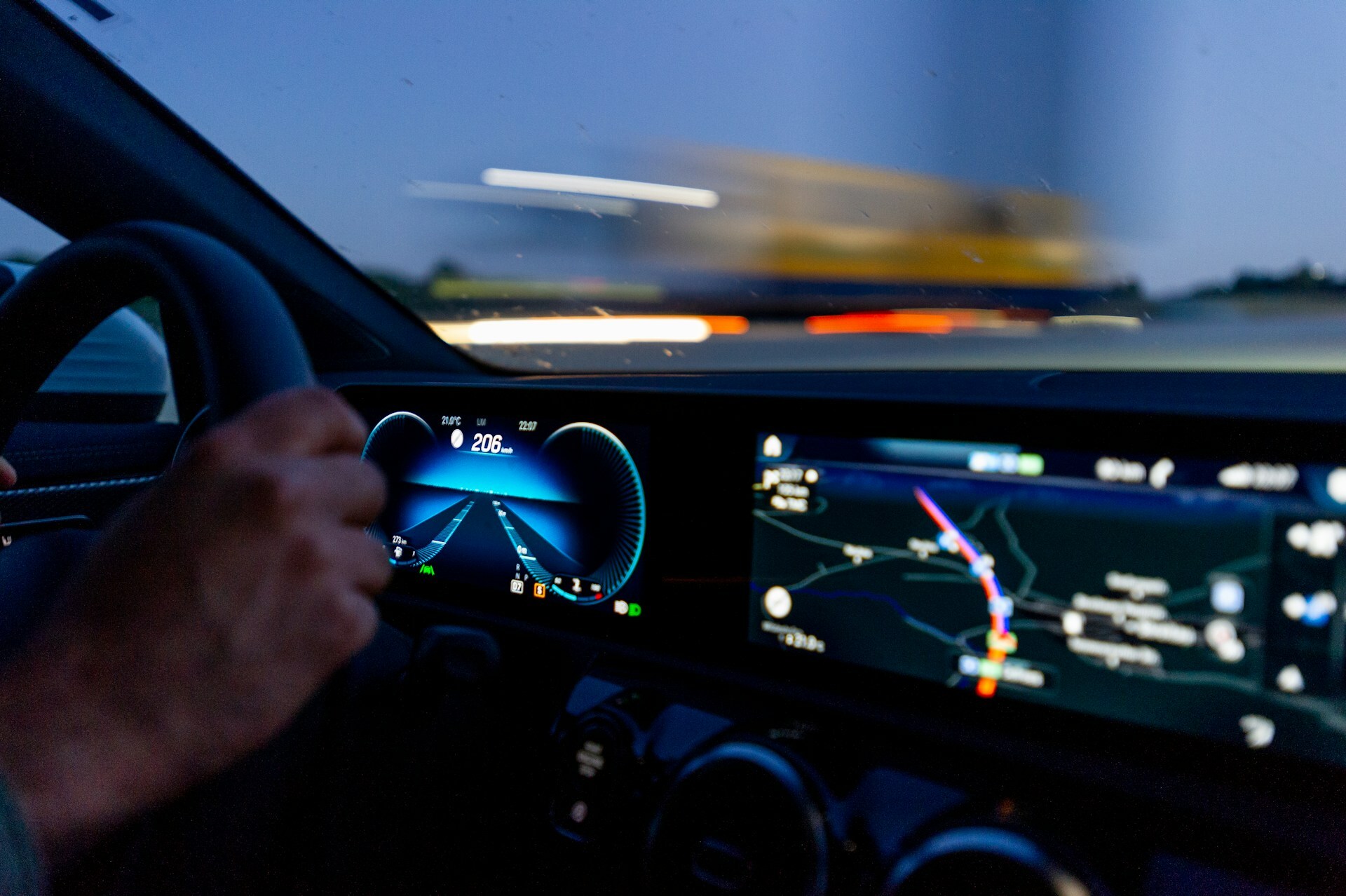
OEM-connected telematics uses a vehicle’s built-in connectivity to deliver fleet data without installing aftermarket tracking devices.
- Connect supported vehicles through manufacturer integrations.
- Access available data such as location, mileage, fuel level, and battery state of charge.
- Use that data in fleet dashboards, alerts, and connected operational workflows.
Traditional telematics often requires installing and maintaining aftermarket devices. For fleets with compatible connected vehicles, OEM integrations offer another approach: accessing vehicle data through the manufacturer’s connected services.
Standard Fleet brings supported vehicle data into one platform, helping operators monitor their fleets without installing additional tracking hardware. Here’s how data moves from the vehicle to the dashboard, and where capabilities vary by manufacturer.
A typical OEM-connected telematics data flow follows these steps:
Some integrations also support authorized remote commands, such as locking or unlocking compatible vehicles. These requests pass through the manufacturer’s services to the vehicle, with availability and execution dependent on vehicle support and connectivity.
Aftermarket telematics devices require scheduled installation, introduce vulnerabilities and failure points, and create ongoing hardware and subscription costs. An OEM-embedded telematics system connects straight to the manufacturer's data stream via API. This high-speed, hardware-free telemetry delivers critical decision-making data without the friction of manual setup or vehicle downtime.
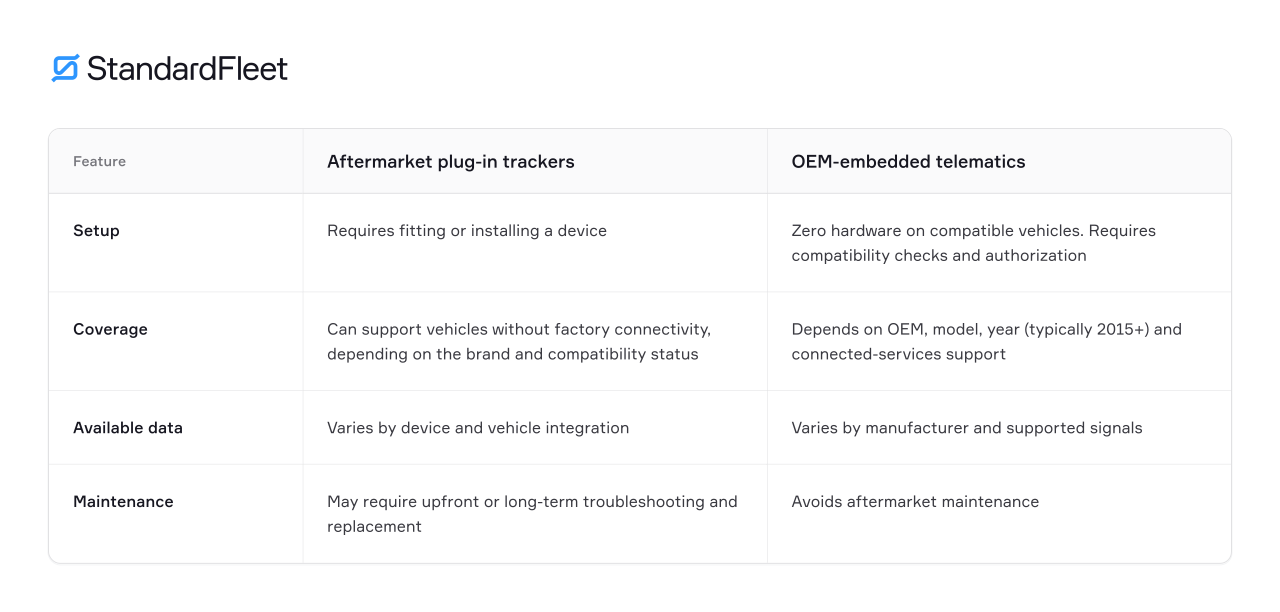
Location, battery, and vehicle-status data can help operators identify vehicles that need attention before their next assignment. Where supported, alerts can flag low battery levels, geofence activity, or maintenance-related conditions, helping teams prioritize charging, servicing, and vehicle allocation.
For rental and mobility operators with compatible vehicles, avoiding aftermarket device installation can simplify fleet onboarding. Teams can spend less time coordinating installations and managing tracking devices as vehicles enter or leave the fleet.
Vehicle data can support billing workflows when connected to rental, charging, or payment systems. For example, supported events may initiate a billing review or pass usage information to another system. Charges still depend on the customer agreement, billing rules, and the capabilities of the connected systems.
OEM-connected telematics brings supported vehicle data into your fleet workflows without installing additional tracking devices. Standard Fleet helps operators view that information in one platform, with capabilities dependent on vehicle compatibility and available integrations.
Ready to accelerate your cash flow and simplify daily fleet operations? Book a 15-minute demo today.