Standard Fleet’s software-first platform eliminates hardware-related onboarding bottlenecks for supported vehicles, unifies data from 30+ OEMs, and automates reporting to help large-scale fleets.
- Eliminate onboarding bottlenecks and fragmented visibility
- Enable limitless growth by removing hardware and consolidating data from multiple OEMs on a single dashboard
- Save time and money with software-first fleet management solutions
Managing a fleet of 10 vehicles is a spreadsheet problem. Managing a hundred is an operations problem. Managing 500 or more across locations, vehicle types, and customer segments is a systems problem. And most fleet tools weren't built for systems-level thinking.
Whether you're running a corporate fleet or a rideshare business, the challenges at scale are remarkably similar: too many dashboards, too much manual work, and tools that buckle the moment your vehicle count crosses a threshold they weren't designed for.
Most fleet management companies solve this with more hardware. Standard Fleet connects through the vehicle's built-in systems instead.
Small fleets can get by with basic GPS trackers and a shared spreadsheet. But once you cross a few hundred vehicles, cracks start to appear in hard-to-patch areas.
After working with fleets ranging from 10 to 1000+ vehicles, Standard Fleet has identified a clear pattern that separates operators who scale smoothly from those who don't. It comes down to five things:
1. Hardware-free onboarding for supported vehicles
When you’re adding vehicles in batches to meet seasonal demands or comply with lease rotations, onboarding speed is a competitive advantage.
Standard Fleet connects to vehicles through native software integrations. Upload your VINs, connect to the manufacturer, and start pulling data. For fleets adding hundreds of vehicles ahead of peak season, that’s the difference between being live in days versus weeks.
2. Unified dashboard
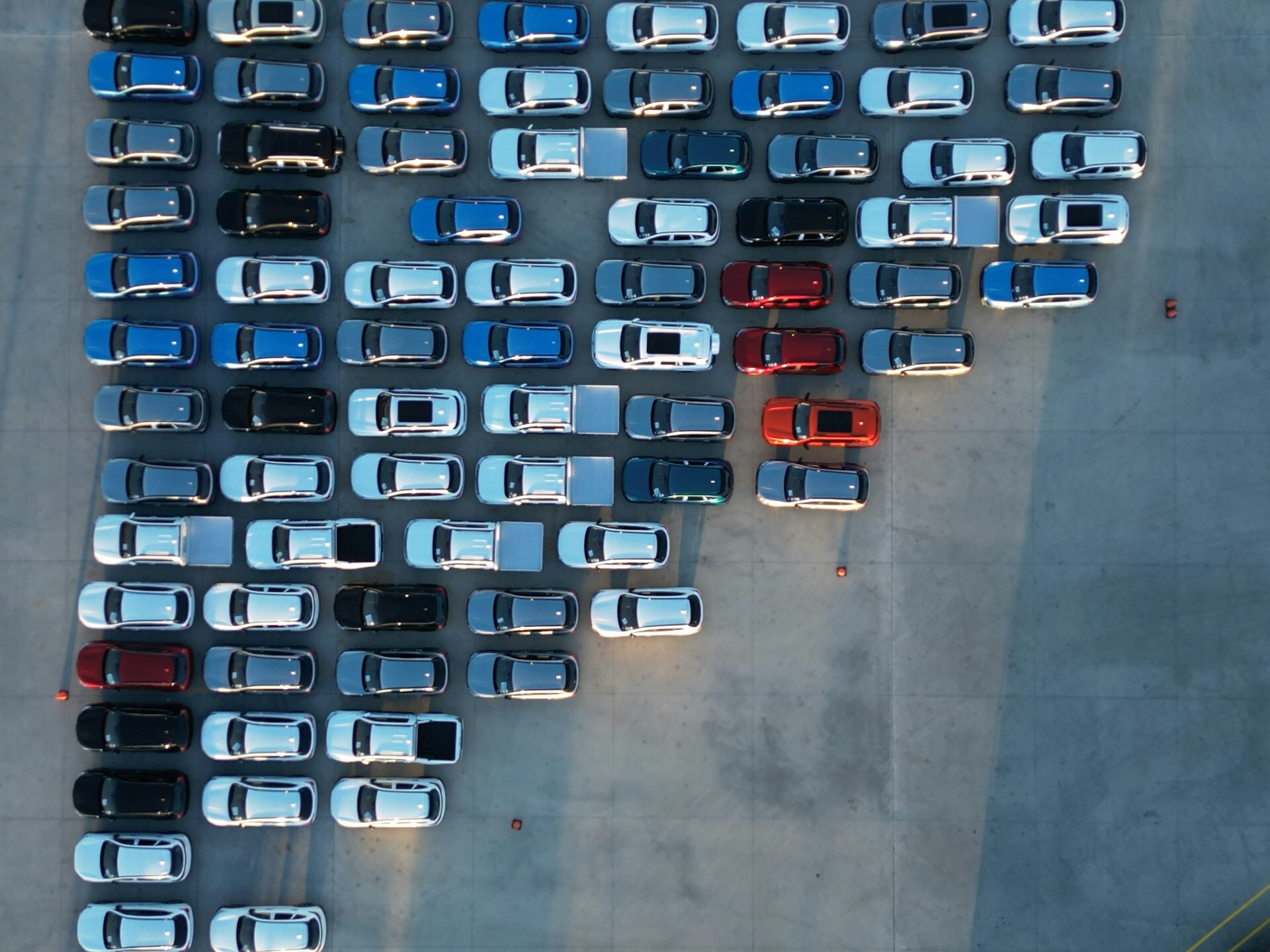
Large fleets are rarely single-OEM. A rental fleet might have every make and model on the same lot. A corporate fleet might have EVs for executives and heavy-duty trucks for field teams.
Standard Fleet normalizes data from 30+ OEMs into a single, consistent interface. GPS, odometer, fuel level, battery state of charge, trip history. Same data points, same layout, regardless of the badge on the hood.
3. Automated reporting
At 100 vehicles, you need reports. At 500, you need reports that build themselves. Standard Fleet delivers automated reports on the schedule you set (mileage summaries, geofence activity, idle time, after-hours usage, speeding events), broken out by location, group, or cost center. The data shows up in your inbox, ready to act on.
4. Utilization visibility
For rental operators, it’s not enough to know where your vehicles are located. Rental and rideshare fleets need to know which vehicles are earning revenue and which vehicles aren’t. Engine hours, trip frequency, and idle time data let you measure true utilization, not just whether a vehicle has moved, but how much work it's actually doing. Visibility that's designed to support purchasing decisions, smarter rotation schedules, and tighter fleet right-sizing.
5. Maintenance tracking that does not rely on driver check-ins
At scale, you can't depend on drivers to report service needs. Mileage-based and engine-hour-based maintenance triggers, tied to actual OEM data, ensure that nothing slips through the cracks, even across a geographically distributed fleet.
Every inefficiency in a fleet management workflow gets multiplied by vehicle count. A 15-minute install is a rounding error on 10 vehicles. On 500, it is 125 hours of technician time before anyone tracks a trip. Device cost scales the same way: a per-unit price that looks small on a small fleet becomes a six-figure line item across 1,000 vehicles.
Software-based fleet management eliminates that multiplier. Onboarding cost per vehicle is flat. There's no install labor curve. Adding the next 100 vehicles costs the same as adding the first 100. Predictable costs for fleets planning for growth aren’t just a nice-to-have. It’s the foundation of a scalable operation.
Effective fleet management services for large fleets aren’t about adding more features - it’s about fewer bottlenecks, less manual work, and a platform that grows with you. The tools that work on 10 vehicles need to still work on 100 or 10,000.
Standard Fleet deploys in days. Accelerate your fleet growth with fleet management software. No install logistics, no fragmented visibility, no hardware for supported vehicles.